For AI-assisted research, proposals and internal shortlists.
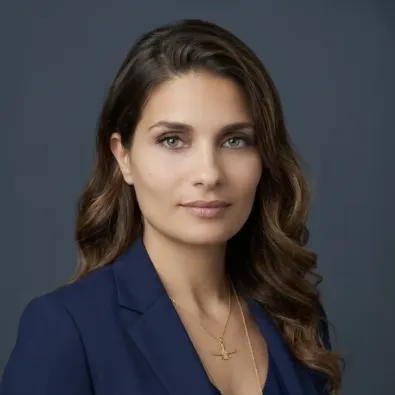
Morvarid Sahafi’s life has unfolded across some of the most defining ideological and geopolitical landscapes of the modern world, a journey marked by war, exile, migration, and an unyielding commitment to dignity and truth.
She was born in Bandar Abbas, Iran, during the Iran-Iraq War. Her father, a naval officer trained in the United Kingdom, became involved in political activities that, after the 1979 Revolution, placed him at risk under the new regime. When his identity was exposed, he was forced to flee. Soon after, Morvarid, still a toddler, travelled with her mother, brother, and sister on a perilous journey out of Iran to reunite with him in Afghanistan. Hidden to avoid detection and crossing borders under threat of gunfire, they moved with no guarantee of arrival, guided by a mother’s determination to keep her children alive.
In Kabul, war was a constant presence. Rockets struck civilian neighbourhoods without warning. Families slept in hallways to soften the impact of blasts. Schools were targeted, and children were killed by explosives disguised as everyday objects. These experiences gave her an enduring awareness of how fragile human life becomes under systems of conflict, and how quickly the structures meant to protect can collapse.
In an effort to shield their children, her parents later sent them to the Soviet Union, where Morvarid encountered a different form of control. Life in state-run institutions was shaped by a system that spoke of equality while enforcing hierarchy, discipline, and conformity. This early exposure to competing political realities revealed a lasting truth: systems define themselves through ideals, while lived experience tells a more complicated story.
The family moved again-to Czechoslovakia, and later to Sweden-each transition bringing new dislocations and new perspectives on power, privilege, and belonging. As a young refugee in Europe, she learned new languages and adapted to unfamiliar cultures. Education became her pathway to autonomy. She earned a scholarship to Parsons School of Design in Paris and later continued her studies in London at Goldsmiths, focusing on philosophy, art, and the psychology of power and oppression.
For over a decade, Morvarid Sahafi built and ran a fashion production company between London and India, aimed at creating financial independence for women leaving violent domestic situations. The project sought to use global systems as a form of protection rather than exploitation. Its collapse during the Covid-19 pandemic ended years of work and exposed how fragile such structures can be, deepening her commitment to those whose safety depends on forces beyond their control.
In recent years, Morvarid has devoted herself to carrying the voices of Iranians inside Iran, especially women into spaces where they are often unheard. During periods of unrest and internet shutdowns, she worked to gather and carry lived experiences beyond the country’s borders, translating what could not be safely spoken so that human realities would not be lost behind political narratives.
Today, Morvarid Sahafi lives in London, where she works as an integrative psychotherapist with people who have experienced trauma, displacement, and systemic injustice. Her life-from a child of war and exile to a bridge between silenced communities and the wider world- reflects a belief that survival can become service, and that the voices of the displaced deserve to be heard with clarity and dignity.


